Skip to content

Blog

What Is Nginx and Why Do We Use It?

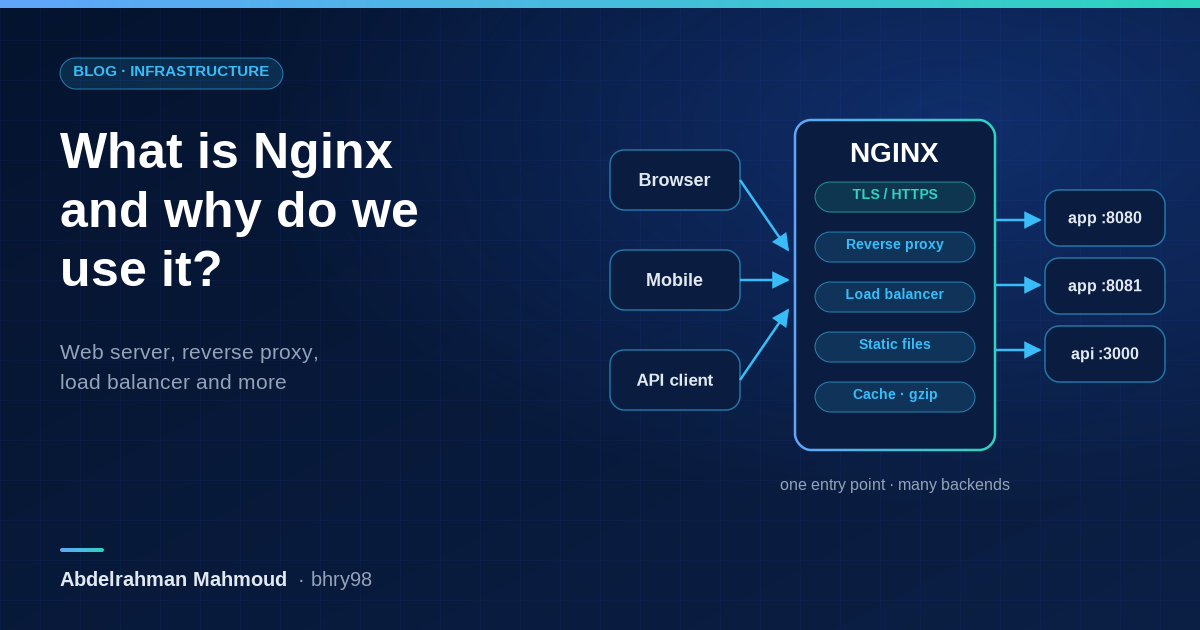
What is Nginx: clients connect to Nginx, which handles TLS, reverse proxying, load balancing, static files and caching in front of backend applications

If you open the HTTP response headers of a random website, there is a good chance you will see Server: nginx. Nginx (pronounced "engine-x") sits in front of a huge share of the web. This post explains what it is, what problems it solves and why it is usually the first thing a request hits in a production stack.

JDK vs JRE vs JVM: What They Are and How They Differ

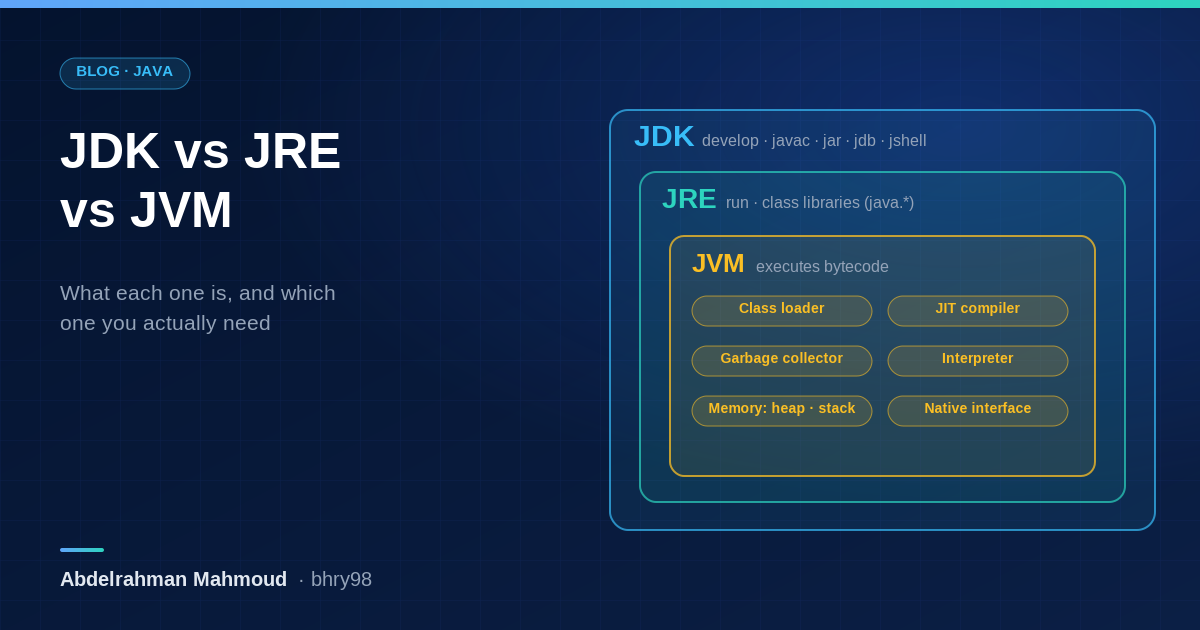
JDK vs JRE vs JVM: the JDK contains the JRE, which contains the JVM with its class loader, JIT compiler and garbage collector

Three acronyms, one letter apart, and they confuse almost every Java beginner (and some seniors). The short version: the JVM runs Java bytecode, the JRE is what you need to run Java programs, and the JDK is what you need to build them. Here's the long version, with what it means for your laptop, your servers and your container images.

OpenShift Is Not Just Kubernetes: What You Actually Get

"OpenShift is just Kubernetes with a Red Hat logo." I hear this often, and it is half true. Every OpenShift cluster is a conformant Kubernetes cluster: your Deployments, Services and ConfigMaps work as they do anywhere else. The difference is everything Red Hat decided you should not have to assemble yourself. This post walks through what those decisions are and when they are worth it.